
Mature skin is skin after forty or fifty that renews itself more slowly, has fewer of its own lipids and less moisture, and appreciates richer but still gentle care. If you are looking for cosmetics for mature skin, take a look at the Peptide day cream or the Deep cleansing balm and 2in1 mask for mature skin, or let our Advisor guide you.
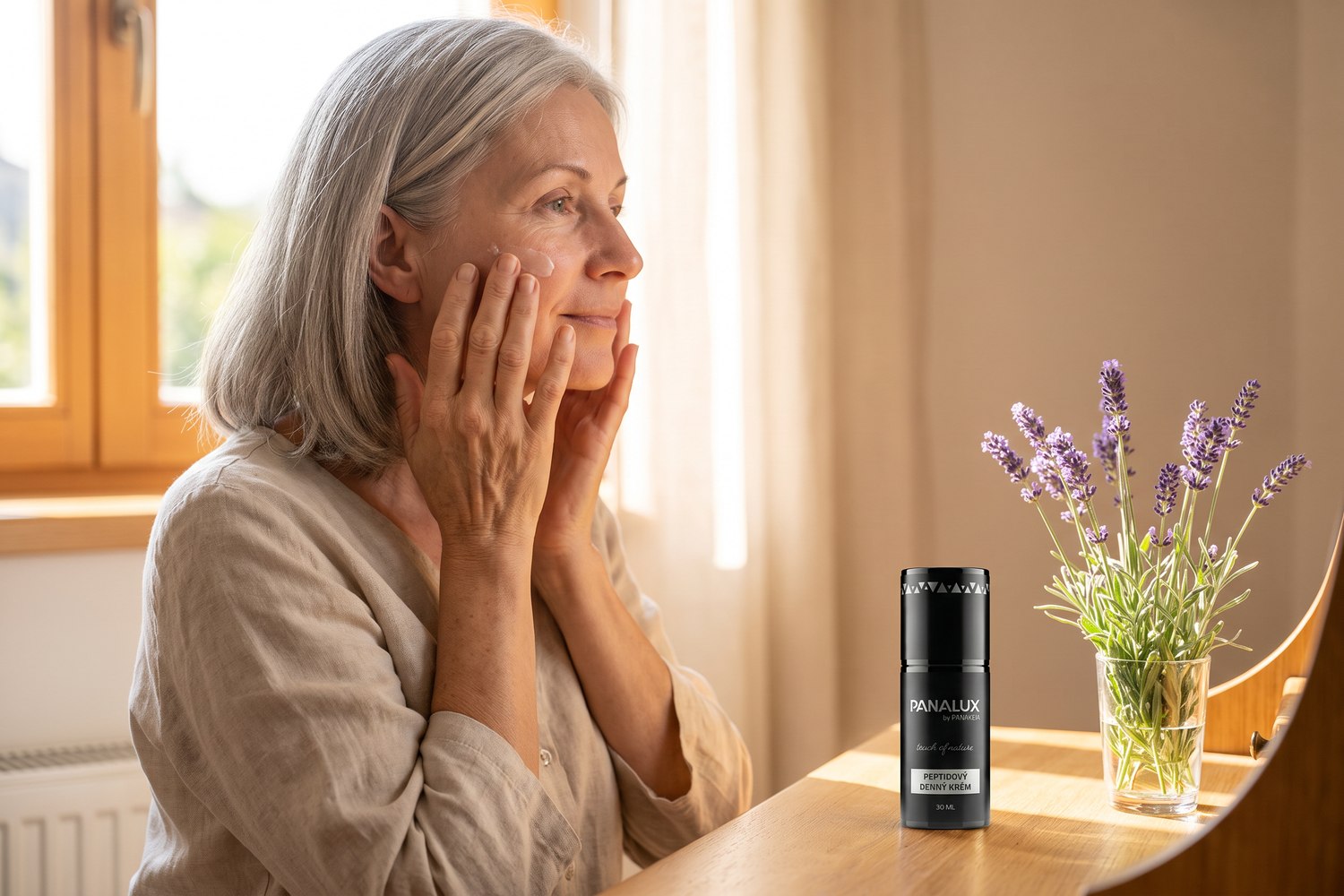
What changes with mature skin
Mature skin is not skin that has gone wrong; it is skin that is changing. As the years pass, dead cells shed more slowly, which makes the skin look duller, and the collagen and elastin fibres that support the skin weaken too. At the same time the amount of natural sebum falls, so mature skin more often feels drier and tightens more easily. Around the menopause, hormonal changes join in and can make the skin thinner and more sensitive. The link between skin ageing and hormonal changes is also discussed in studies on skin ageing and menopause (source: the PubMed database). The pace of these changes is different in every woman and is influenced by genetics, sleep, sun and the care you give your skin.
What cosmetics for mature skin can really do
With mature skin it pays to have realistic expectations. Cosmetics work on the surface and in the upper layers of the skin, so they can improve how the skin looks and feels: it may be softer, suppler, more hydrated, and fine lines may be less visible. They will not, however, change the structure of the skin or replace a medical procedure. That is why regularity matters, not the number of steps, and if you are deciding between novelties, rather choose one that you will keep using every day. Mature skin appreciates a routine that pampers it without weighing it down, with ingredients that replenish lipids, bind moisture and contribute to the look of firmness. A slow facial massage while cleansing or applying cream can please it too, turning an ordinary routine into a moment of pause just for you.
Which ingredients suit mature skin
In cosmetics for mature skin you will most often meet peptides, bakuchiol, oils with squalane and ingredients that bind moisture. The ingredients below are chosen from the real composition of Panakeia products, which you can check in the INCI on their page. To help you find your way among the names, the overview states what each ingredient is used for in cosmetics. It pays to choose by composition, not by a promising name, because a product name is not the same as its composition. Mature skin does not need to be burdened with everything at once, so choose one or two ingredients from the table that make sense to you and introduce them into your routine gradually. The overview shows what each is suited to and where to find it.
| Ingredient (INCI) | What it is used for in cosmetics | Where to find it |
|---|---|---|
| Acetyl Hexapeptide-8, Palmitoyl Tripeptide-5 | Peptides used for the look of smoother, firmer skin | Peptide day and night cream, Hydrating peptide serum |
| Bakuchiol | A plant ingredient that some women choose as a gentler alternative to retinol | BOSORKIN LEKTVAR face serum |
| Squalane, Carthamus Tinctorius Seed Oil | Softening, suppleness and protection against moisture loss | Deep cleansing balm for mature skin |
| Sodium Hyaluronate, Glycerin | Binding moisture in the surface layer of the skin | Peptide creams and serum |

A routine for mature skin, morning and evening
In the evening start with cleansing that does not dry the skin. The Deep cleansing balm and 2in1 mask is built on safflower and castor oil, squalane and oat extract, and it also suits a facial massage, after which you rinse it off with lukewarm water. Then you can reach for a serum and a night cream. If you want to try an ingredient that some women prefer instead of retinol, take a look at BOSORKIN LEKTVAR with bakuchiol, whose composition is complemented by squalane, tomato oil and pomegranate. You can also read further studies on bakuchiol. In the morning a day cream is enough, for example the Peptide day cream with peptides, squalane and hyaluronic acid. The Peptide day cream also contains the fragrance ingredients Citronellol, Geraniol and Eugenol, which you will find in the INCI.
- Morning: a gentle rinse, serum as needed and a day cream.
- During the day: if you are going out, add a cream with sun protection.
- Evening: cleansing balm with a massage, lukewarm water, serum and night cream.
- Now and then: an extra quiet evening with no new products, so your skin can rest.
What mature skin does not need
Mature skin does not need ten steps or the scrubbing that many women over forty intensify in an effort to rejuvenate it. Strong peels, hot water and alcohol toners take away from the skin exactly what it is losing, namely lipids and moisture. Nor does it help to switch products every week, because skin needs time for a difference to show. More steps do not mean better care, and sometimes it is quite the opposite. Mature skin rests on three things: gentle cleansing, enough hydration and lipids, and regularity. If your skin is also more sensitive, read the article on sensitive skin too, and if it is mainly tightness and flakes that trouble it, you will find more in the text on dry skin on the face.
Did you know…
Did you know that a product name is not its composition, and that real ingredients, such as peptides or bakuchiol, can only be found in the INCI list on the label?